Debian runc CVE-2025-52565 escape risk—patch hosts promptly
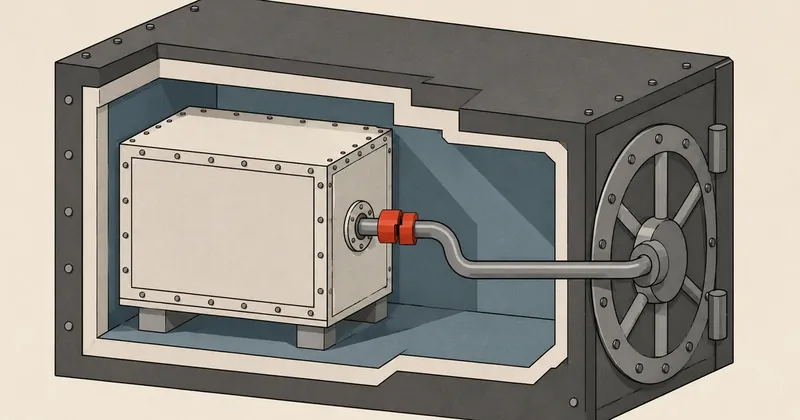
Administrators of Debian hosts running runc should update and check the binary their runtime actually invokes, prioritizing systems that accept images or build jobs from others.
1-minute summary
- Symptom / problem
- runc มีช่องโหว่ในขั้นตรวจอุปกรณ์และเส้นทาง mount ถ้าผู้โจมตีควบคุม image หรือการสร้างคอนเทนเนอร์ได้ ก็อาจกระทบโฮสต์หรือหลุดจากคอนเทนเนอร์ได้เมื่อเงื่อนไขครบ
- Who should read
- โฮสต์ trixie ที่ใช้แพ็กเกจ runc ก่อน 1.1.15+ds1-2+deb13u1 ส่วนระบบที่ติดตั้ง runc แยกจาก APT ต้องตรวจรุ่นกับผู้จัดจำหน่ายที่ใช้
- Fix in short
- อัปเดต runc ของ trixie จาก security repository แล้วตรวจ executable ที่ใช้จริง ต้องติดตาม CVE-2025-52881 แยก เพราะ DSA นี้ยังไม่ได้แก้รายการนั้น
I saw that Debian had released DSA-6656-1 to fix vulnerabilities in runc, so I put together the checks needed on the host. runc creates and starts containers according to the OCI standard. Anyone running websites in containers also needs to check the runtime layer. Updating applications in an image does not change the host's runc.
What happens during container creation
This table uses the CVE list from the Debian DSA tracker and the mechanisms described in the project's advisories.
| Vulnerability | Flaw | Impact under the required conditions |
|---|---|---|
| CVE-2025-31133 | Insufficient checks that /dev/null, used to mask files in maskedPaths, is a real device |
Can allow mounts at unintended locations, host data leaks, host denial of service, or container escape |
| CVE-2025-52565 | Insufficient checks on the bind-mount of /dev/pts/$n onto /dev/console |
Can make protected procfs files writable, allowing an impact on the host or a container escape |
| CVE-2026-41579 | An image uses /dev as a symlink to trick rootfs preparation |
Can delete files named ptmx or create symlinks with fixed names and targets on the host in some cases |
For CVE-2025-31133, an attacker must be able to control container creation and the relevant paths, for example by using containers that share mounts to race path changes while runc is running. Upstream has also tested that this works through docker buildx build. CVE-2025-52565 involves containers that use a console: runc mounts the console before applying maskedPaths and readonlyPaths, so an attacker may obtain a writable file even though its original path should be protected. See the maskedPaths advisory and console advisory.
High scores, but the conditions matter too
The score for CVE-2025-52565 in the CVE record from CNA GitHub differs from upstream's score. Both rate it High, but assign different values for attack requirements, privileges required, user interaction, and impact.
| Source | CVSS 4.0 | Vector |
|---|---|---|
| CNA in the CVE record | 8.4 High | CVSS:4.0/AV:L/AC:L/AT:N/PR:N/UI:P/VC:N/VI:H/VA:N/SC:H/SI:H/SA:H |
| upstream runc | 7.3 High | CVSS:4.0/AV:L/AC:L/AT:P/PR:L/UI:A/VC:H/VI:H/VA:H/SC:H/SI:H/SA:H |
Both vectors are Local. The CNA's PR:N does not mean anyone can launch remote RCE against the system. An attacker needs a way to get the system to create a container from an image/config they control. Access permissions on the target files also matter. The console mount happens after pivot_root, so it cannot be used to write host files directly, but /proc/sys/kernel/core_pattern can still provide a way to affect the host.
I prioritize build systems and hosts that accept images from multiple parties for patching because they give attackers more opportunities to submit jobs that meet the required conditions. CVE-2025-31133, CVE-2025-52565, CVE-2026-41579, and CVE-2025-52881 are not in the 2026-11-24 KEV catalog, according to the JSON published by CISA in its official repository, so this edition has no date added or due date for any of the four CVEs. Absence from KEV does not establish that a vulnerability has never been exploited, and a CVSS score is not evidence of exploitation.
For CVE-2026-41579, upstream assigns CVSS 3.1 3.3 Low, with vector CVSS:3.1/AV:L/AC:L/PR:N/UI:R/S:U/C:N/I:L/A:N, and states that it cannot be exploited through Docker because the read-only layer above hides the symlink. This exception applies only to this vulnerability, not the other two CVEs. See the rootfs advisory.
Which versions are fixed, and what remains
This table shows Debian package status from the Debian runc tracker as of 25 November 2026. If you use a binary from another distributor, check it separately.
| Debian suite | runc package | All three CVEs in this DSA |
|---|---|---|
| bookworm | 1.1.5+ds1-1+deb12u1 |
still vulnerable |
| original trixie | 1.1.15+ds1-2 |
still vulnerable |
| trixie-security | 1.1.15+ds1-2+deb13u1 |
fixed |
| forky / sid | 1.3.6+ds1-1 |
fixed |
Debian patches the existing package branch, so you need to check the full revision. If runc --version shows only 1.1.15, that is not enough to determine whether it has been patched. Upstream lists CVE-2025-31133 and CVE-2025-52565 as fixed in 1.2.8, 1.3.3, and 1.4.0-rc.3. For CVE-2026-41579, the fixed versions in the advisory are 1.3.6, 1.4.3, and 1.5.0-rc.3. Anyone installing it separately needs to check all the advisories with their distributor.
There is also conflicting version information in official sources. The affected field in the CVE-2025-31133 record includes 1.4.0-rc.3 as vulnerable, but the description in the same record and the upstream advisory say this version is fixed. The record's description also lists the affected 1.3.x range through 1.3.1, while the affected field and upstream include 1.3.2 as well.
For CVE-2026-41579, the CVE record's description and the Debian tracker list the fixed version in the 1.5 branch as 1.5.0, but the record's affected field and the upstream advisory say it is fixed starting with 1.5.0-rc.3. The Debian package table above follows the status in the Debian tracker.
The Debian tracker still lists trixie version 1.1.15+ds1-2+deb13u1 as vulnerable to CVE-2025-52881. Upstream announced this vulnerability alongside CVE-2025-31133 and CVE-2025-52565, but this DSA does not fix the whole set. Keep tracking CVE-2025-52881 and mitigating the risk while waiting.
Check the remaining vulnerability directly in the CVE-2025-52881 tracker. For bookworm, follow that release's update channels rather than mixing in trixie packages to match the version in the table.
Update the host and trace the binary actually in use
- Inventory runtimes Check the suite, package, and executable invoked by the container system.
- Prepare a maintenance window Restrict untrusted image/build jobs while waiting, then update through the installation source.
- Check the fixed version Compare the Debian revision or the distributor's patch evidence.
- Test before resuming jobs Test creating trusted containers, check service health, and record the remaining CVEs.
Run these information-gathering commands on the host.
cat /etc/os-release
dpkg-query -W -f='${binary:Package}\t${Version}\n' runc
apt-cache policy runc
type -a runc
type -a only tells you which executables the shell can find. You also need to inspect the service/config. Docker allows the runtime path to be configured, while containerd has BinaryName. Check ExecStart to see which flags the daemon uses and where it gets its config.
systemctl cat docker.service containerd.service
sudo containerd config dump
Check the flags, imported config, and every runtime handler using the Docker daemon and containerd CRI config documentation, then replace the first line with the path the daemon actually uses.
# ตัวอย่างเท่านั้น: แทนด้วย executable ที่ runtime เรียกจริง
runc_bin=/usr/bin/runc
readlink -f "$runc_bin"
"$runc_bin" --version
dpkg-query -S "$runc_bin" "$(readlink -f "$runc_bin")"
If dpkg cannot find the package that owns the file, or the file belongs to another package, check how it was installed. It may have come with a vendor bundle or been installed as a standalone binary. Updating the runc package may not change the binary the daemon uses.
For Debian 13 (trixie) systems actually using the Debian runc package, enable the security repository and update using the apt-get instructions.
sudo apt-get update
apt-cache policy runc
sudo apt-get install --only-upgrade runc
dpkg-query -W -f='${Status}\t${Version}\n' runc
Confirm that installation succeeded and that the installed version is 1.1.15+ds1-2+deb13u1 or a newer fixed version from the same suite. If the candidate is still old, check repositories, pins, and holds first. Then check the executable again and test workloads according to the platform documentation. Follow the requirements of your runtime for restarting or recreating containers.
While waiting for patches, avoid untrusted images. For CVE-2025-31133 and CVE-2025-52565, upstream recommends a user namespace that does not map in the host's root user, or rootless operation if the workload supports it. If you do not use a user namespace, use non-root together with noNewPrivileges. For CVE-2026-41579, upstream states that a user namespace helps restrict file creation or deletion according to the mapped user's permissions. These measures reduce risk while waiting, but you still need to patch and test file permissions with the application before using them.
Check whether the host has been compromised
The advisories I checked do not provide IOCs such as hashes or malware filenames, so I have not included commands that could immediately declare a machine clean after a search. Compare container creation and build history against approved jobs, checking image digests and who submitted the jobs as well. Then use runtime logs to help trace events.
sudo journalctl -u docker.service -u containerd.service --no-pager
sudo cat /proc/sys/kernel/core_pattern
sudo dpkg --verify runc
Compare core_pattern with the value the system is supposed to use. A pipe to a coredump helper may be normal. dpkg --verify can only check files in packages; it does not cover binaries outside the packages being checked. These results cannot establish that no intrusion has occurred. Even if the logs and checks show nothing unusual, they still cannot establish that a container escape has never happened.
If there is evidence of unusual host access, isolate the host from new jobs and preserve evidence before taking further action. For basic checks, see Read-only Debian server security checks.
How I prioritize the work
I put hosts that accept images or build jobs from others first in the patch queue and reduce untrusted jobs while waiting. Systems where images and container creators are controlled should be updated in the next available maintenance window, because the impact can reach the host. Before closing the work, verify that the runtime actually invokes a patched binary and keep tracking CVE-2025-52881.
Sources: Debian DSA-6656-1, runc package tracker, CVE-2025-52881, upstream runc maskedPaths, console mount, rootfs symlink, CNA CVE-2025-52565. I checked these sources as of 25 November 2026; the KEV status uses the 2026-11-24 edition. I will come back and update this later.
Want us to set this up?
Get help with server setup, configuration, migration, or troubleshooting. Save time for the work that matters.
Hit something like this? Stuck somewhere?
Come trade notes on the LinuxThai board


Comments 0
No comments yet — be the first